Friday, September 27, 2019

Beans Beans Beans

We continued our investigation into beans and seeds this week.
We watched the black-eyed beans spout shoots in 3 days on our windowsill. Not only did they germinate quickly, but over the long weekend they actually grew into plants!
Jack and his beanstalk!
This week we "planted" the beans in the same manner...but put them in a dark corner and covered them with a curtain.
Do seeds need sunlight to germinate???

Well after observing and taking notes of the seeds everyday we have concluded that NO...seeds don't need sunlight to germinate!


However, we did learn that they DO need sunlight once they begin to grow into plants.

We are also watching and comparing two other types of beans: Black Turtle Beans and Red Kidney Beans.
There is a lot of scientific discovery happening in 3 G!

Math Talk #3


Nature Walk

Making Cross Curricular links with DPA, science and art; we went out on an adventure seeking different types of leaves and seeds.

Then we brought some of the different leaves into our classroom and sponge painted some leaf prints. Mixing and making colours was an awesome time!


Terry Fox Walk

Image result for picture of terry fox
Terry Fox’s dream was to run across Canada, to raise money for cancer research. His goal was to run over 8,000 km from the east coast of Canada to the west coast of Canada. He named his run, The Marathon of Hope and started it on April 12, 1980. He ran for 143 days and was then forced to stop because the cancer returned. Now every year, more than 8,000 schools across Canada hold a Terry Fox Run to help Terry’s dream for a world without cancer come true.
Today, we the staff and students of St. William, honoured the memory of Terry Fox.
Our class made a mural for the Terry Fox school assembly.


Friday, September 20, 2019

Math Spiraling

This year I will be SPIRALING the Math Curriculum. WHAT DOES IT MEAN TO “SPIRAL THE MATH CURRICULUM"?
In a nutshell, to spiral the Ontario Math Curriculum means that you are continually
reviewing previously taught material... versus... teaching one unit at a time.
Consistently reviewing strands allows students to tackle math with confidence because if they don’t master a skill the first time it is taught, they still get ample chances to practice their skills!!
WHY SPIRALLING LEADS TO ROBUST LEARNING:

Spiralling the Ontario Math Curriculum allows students to make connections between math concepts, which leads to robust learning. For instance, showing students how fractions relate to time (half past, a quarter to) and money (two quarters equals half a dollar) is an example of making connections between math concepts. BUT, it is difficult for students to make these connections if they learn about fractions, time, and money in isolation, just ONCE, and at separate times of the year. Spiraling allows students to see connections between math strands because strands are revisited throughout the year and integrated to explicitly show connections.
Please let me know if you have any questions or concerns. I am confident that this approach will benefit all learners, meeting the student at their current learning level.

Coming Up...

Also on Thursday the 26th...Meet the Team Breakfast 8:45am and the Sunset Mass (at Good Shepherd Parish) 6:30pm.

Plants

Children are born curious. 
They wonder, explore and discover. 
Science experiments are great hands on activities where children question, predict and learn.
This week we learned the major parts of plants.
To actually see the stem in action (transporting water from the roots to the flower and leaves),we put the white carnations in blue water and the celery in red water.


The celery had red leaves.
3 Days Later...
There are small blue dots on the carnation.


Students also learned about GERMINATION (sprouting).
 
Each student "planted" 5 beans in a clear cup with damp paper towels. Everyday we watched what would happen.

By Day 3 some of the beans began to germinate.


*identify the major parts of plants, including root, stem, flower, stamen, pistil, leaf, seed, and fruit, and describe how each contributes to the plant’s survival within the plant’s environment
*germinate seeds and record similarities and differences as seedlings develop

Friday, September 13, 2019

Art

We had a cross curricular moment today. Making a connection of Aaron's Hair by Robert Munsch to our own art piece. Our focus was on an element of design...Lines!


Math Talk #1 and #2

Image result for math talk
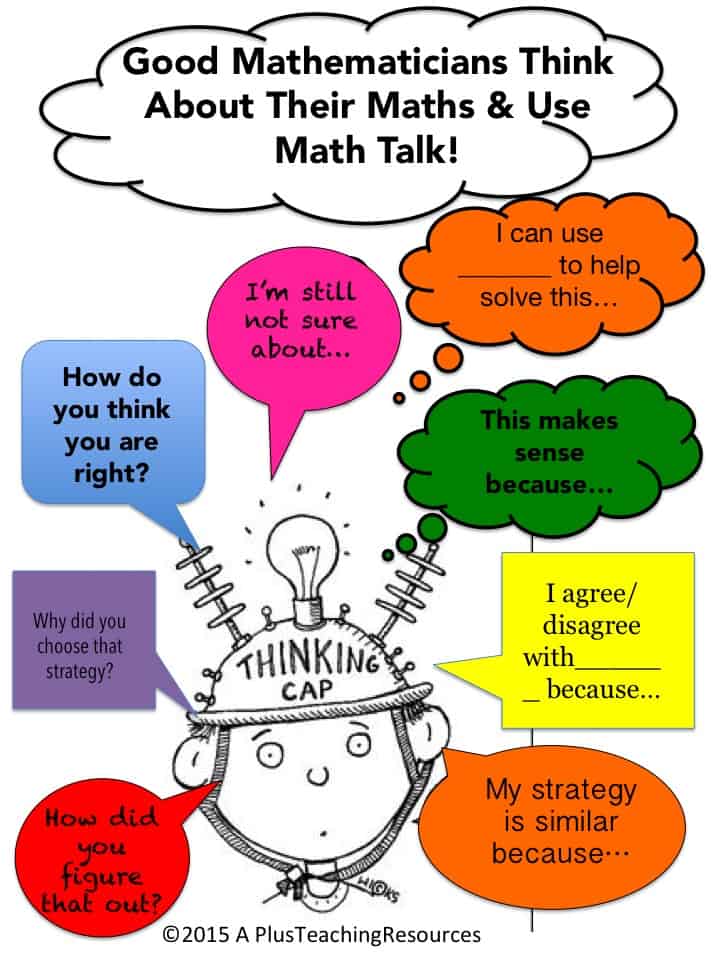
Students worked on their first and second Math Talk. Math Talks allow students an opportunity to question, explain, defend and learn problem solving strategies. Here is a look at our math talks: 


Go ahead and give it a try...these questions are open-ended!

Milk and Frozen Yogurt Sales

Milk and Frozen Yogurt sales will begin on Tues., Sept. 17th. All cash sales will be during lunch. $1 for milk and $2.50 for frozen yogurt.
Image result for milk and frozen yogurt clipartImage result for milk clipart

Assessment

Image result for clipart for report card
Just a break down of how your children will be assessed this year. There are many different ways to assess student learning. Primary student work is tracked regularly through classwork, hands on activities, in-class performance and quizzes/tests. In our class, students are engaged in many hands on activities. While they are working, I am constantly observing and asking questions to assess their ideas and understanding.
How are they planning on solving the problem? What techniques/problem solving skills are they putting into practice? 
Many great conversations and "Ah-ha" moments are had during this time. This method provides immediate feedback on what is working, how can we make it work and what may not be the best path to follow.

*Work sent home will not be evaluated toward their final mark, though, if it is a presentation they will likely be assessed on their oral presentation skills.

Saturday, September 7, 2019

First Term

I like to incorporate many different curriculum expectations when possible. This is called Cross Curricular. Making connections and being fluid allows students to see how math, literacy, the arts, and science can be linked. Here are some of the learning goals we are focusing on at the beginning of this term:


Religion Term 1

Click here to see what we are learning about in Religion this term


Paragraph Writng

We are working on "Hamburger" paragraph writing. Students will be using this hamburger template to guide them through their paragraph writing:
Students worked in pairs to write simple paragraphs. This week we will step up our sentences and add more detail.
Sorting

Grade 3 Curriculum expectation:
"– demonstrate an ability to organize objects into categories, by sorting and classifying objects using two or more attributes simultaneously "


Sample problem: Sort a collection of buttons by size, colour, and/or number of holes.